What you need to know about salt
______________________
A low salt diet helps keep you safe from stroke.
Most New Zealanders eat too much salt, without realising it. This can lead to:
· High blood pressure
· Strokes
· Heart disease
· Kidney disease
· Some cancers
· Obesity
· Osteoporosis
How much salt should you be eating?
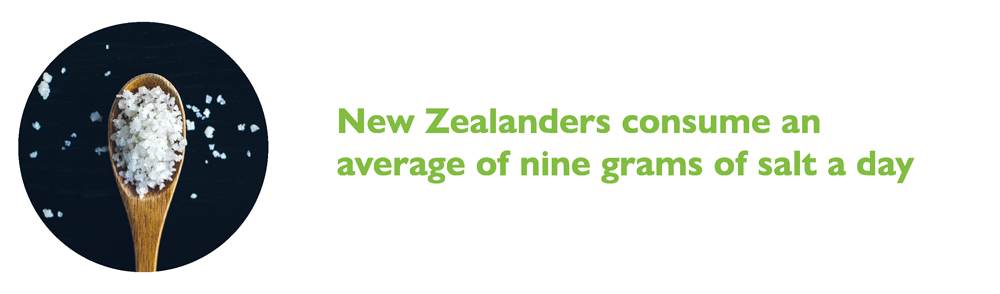
The New Zealand Ministry of Health recommends adults eat less than 5g of salt (2,000 mg of sodium) a day to reduce the risk of high blood pressure and the risk of stroke. That equals about one teaspoon a day.
What is the difference between salt and sodium?
Salt is made from the minerals sodium and chloride. Around 40% of salt is sodium and 60% is chloride. The body needs some sodium but too much can harm our health.
Find out more about ultra-processed foods in this research done by Consumer NZ: Ultra-processed foods pack a sodium punch - Consumer NZ
Eating more whole foods (that is, foods which are as close to their natural form as possible) is your best line of defence against salt.
Here are some simple ways to boost your intake of whole foods:
· Replace packaged foods with homemade versions, then you’ll know exactly what you are eating.
· Most whole foods sit around the perimeter of the supermarket, so try to get most of your groceries from this area rather than the centre where processed foods sit and salt is hidden.
· Try making more homemade smoothies and soups.
· At mealtimes, aim to fill half of your plate with vegetables.
· Add a piece of fruit to your morning or afternoon tea.
· Avoid processed meats and try to add more meat-free meals to your week. Beans, chickpeas and lentils are cheap and excellent meat substitutes.
· Eat more wholegrains by choosing wholegrain breads and cereals, brown rice and wholemeal pasta.
Still looking for ways to slash your salt?
· Try comparing labels on packaged food. Salt is listed as sodium. A low salt option will have less than 120mg of sodium per 100g of food. Click here if you want to know more about reading nutrition information panels.
· Use herbs, spices and other seasonings instead of salt when cooking.
· Eat less high salt foods such as processed meats, smoked foods, marmite, foods canned in brine, takeaways, chips, instant noodles and sauces such as tomato, soy sauce and dressings.
· Breads, breakfast cereals, cheese, baked beans and crackers also contribute significantly to our daily salt intake as we tend to eat a lot of these foods. Try to pick lower salt options within these categories.
Want to know more about salt?
Download brochures and posters in our 'Free resources' section.
References
1. University of Otago and Ministry of Health. A Focus on Nutrition: Key findings of the 2008/09 New Zealand Adult Nutrition Survey. 2011. Wellington: Ministry of Health.