Candra's story
Candra is a young stroke survivor who had her stroke last year. Now, she’s getting ready to walk the Camino de Santiago to raise awareness and encourage others to keep active during stroke recovery.
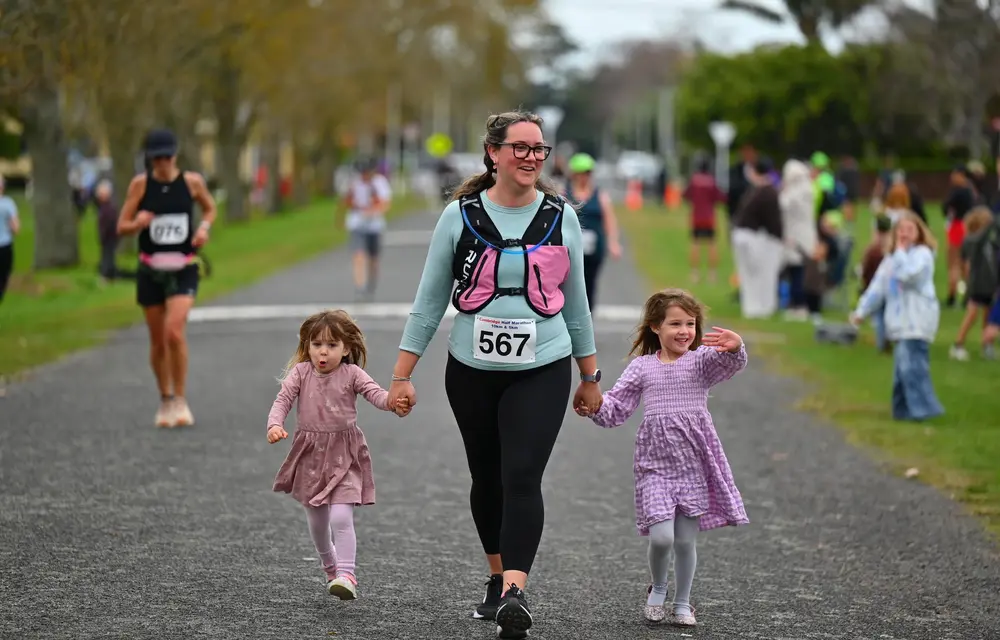
A busy mum, working at a university, and proud of her athletic ability, 34-year-old Candra did not think for one minute that she was at risk of stroke. Candra had been less active after the birth of her children so started training for a half-marathon. On the day of her stroke, she ran a 12km race in Rotorua, which was a huge achievement. Later she noticed her legs were swollen and she was more tired than usual but aside from mentioning it to her mum, Candra didn’t think much of it and carried on with life.
The next day Candra set out on a road trip to Auckland with her husband and two young children. During the trip Candra had problems with her speech.
“I was calling everyone the wrong name and couldn’t engage in conversations. And I was noticing my sentences were coming out weird. Like I would start three words into a sentence, and I couldn’t finish what I wanted to say. I started telling people that I had a migraine, it didn’t feel like a migraine, but I had no other words for what I was experiencing.”
Candra and her family went to a mall afterwards. While they were there her youngest daughter hit her head. They took her to urgent care. While they were waiting to be seen Candra remembers thinking maybe she was the one who needed the conversation with the doctor. But she sat in the doctor’s office and said nothing.
Candra’s husband remembers that she slept the whole way home from their trip, which was unusual. The next day Candra was still experiencing issues with communication. She tried working from home but had to stop because she was struggling to talk with her coworkers. Later that afternoon Candra’s daughter had a ballet exam. After the exam Candra’s husband was still worried about her. Instead of going home, he took her to urgent care.
When Candra met the emergency doctor, language difficulty was her only symptom. It was unclear what they were dealing with, so the doctor ordered a CT scan. The scans showed that Candra had a stroke. The news came as a massive shock to Candra and her family.
“It was definitely not how I thought you would experience a stroke."
The week of her stroke Candra had signed a contract for a new job. Explaining her stroke to her new boss and the team was difficult and the unexpected time away from work was hard to navigate.
“It [work] is a huge part of how we exist in life and it brings a piece of you into the fore. And when you’re not working you feel a bit lost.”
Up to 30% of strokes occur in people under 65 years old so many stroke survivors will need or want to return to work. Stroke Aotearoa Return to Work Advisors assist survivors like Candra with employment-related advice and support to help them confidently re-enter the workforce.
Six weeks after her stroke Candra began to transition back into work with support from Return to Work Advisor Jake Cullen-Ward. Jake said when he first met Candra they were unsure what return to work would look like for her.
“She didn't know how it was going to work and how it would look for her to be back in that position. She was scared of what had happened to her and the knock-on effect it would have on herself, her family and eventually her career.”
With wrap-around support from Jake and her family Candra has recovered well and returned to her previous role.
As part of her stroke diagnosis Candra’s cardiologist found a PFO (Patent Foramen Ovale), a small hole, in her heart. That meant that she couldn’t to do any physical activity. Even holding her children put too much pressure on her heart. But eventually, with surgery and medication, she was able to exercise again.
Candra decided she wanted to get stuck back into something active. Walking has been an activity she has leaned on during her recovery. She values it especially for the opportunities it creates for discussion and connection so signing up for a walking challenge that enabled her to raise awareness of stroke and help others avoid it made total sense.
“It opens that door for discussion and the ability to bring physical activity into the mental space.”
Candra is joining an intrepid group of Stroke Aotearoa supporters who have been affected by stroke to walk the Camino de Santiago in September 2026 to make a meaningful impact on stroke prevention and life after stroke support services.
There's still time to join the Camino de Santiago trek!
Join us this September on an unforgettable international fundraising adventure. Every step you take will help support stroke and the vital services we provide across Aotearoa.